Showing posts with label muscle pain. Show all posts

Wednesday, September 30, 2009

Pop Quiz: Which Food Boosts Your Bones?

Question: Which food boosts your bones?

A) Nuts
B) Milk
C) Onions
D)Whole Wheat Bread


Answer: ALL OF THEM!

Foods such as milk that contain calcium and vitamin D aren’t the only ones that strengthen your skeleton. New research shows that two other compounds, inulin (found in onions and wheat, as well as in asparagus, artichokes, and bananas) and phytate (in nuts and whole grains), are also key. Inulin boosts calcium absorption, and phytate prevents bone mineral destruction. Spanish researchers found that people who ate phytate less than 3 times a week had the lowest bone mineral densities, a risk factor for osteoporosis.

Bottom line: A diverse diet with lots of veggies and whole grains is crucial for healthy bones too.

Prevention.com

Monday, August 24, 2009

Plantar Fasciitis – an Overview

What is Plantar Fasciitis?

Plantar fasciitis is the most common cause of heel pain. The plantar fascia is the flat band of tissue (ligament) that connects your heel bone to your toes. It supports the arch of your foot. If you strain your plantar fascia, it gets weak, swollen, and irritated (inflamed). Then your heel or the bottom of your foot hurts when you stand or walk.

Plantar fasciitis causes stabbing pain that usually occurs with your very first steps in the morning. Once your foot limbers up, the pain of plantar fasciitis normally decreases, but it may return after long periods of standing or after getting up from a seated position.

Plantar fasciitis is particularly common in people who are on their feet a lot, such as athletes and soldiers. People who are overweight, women who are pregnant and those who wear shoes with inadequate support, are also at a higher risk of plantar fasciitis.


What Causes Plantar Fasciitis?

Under normal circumstances, your plantar fascia acts like a shock-absorbing bowstring, supporting the arch in your foot. But, if tension on that bowstring becomes too great, it can create small tears in the fascia. Repetitive stretching and tearing can cause the fascia to become irritated or inflamed. Plantar fasciitis is caused by straining the ligament that supports your arch, which can lead to pain and swelling. This is more likely to happen if:
  • Your feet roll inward too much when you walk (excessive pronation).

  • You have high arches or flat feet.

  • You walk, stand, or run for long periods of time, especially on hard surfaces.

  • You are overweight.

  • You wear shoes that don't fit well or are worn out.

  • You have tight Achilles tendons or calf muscles.

What are the Symptoms?

In most cases, the pain associated with plantar fasciitis:

  • Develops gradually

  • Affects just one foot, although it can occur in both feet simultaneously

  • Is worst with the first few steps after awakening, although it also can be triggered by long periods of standing or getting up from a seated position

  • Feels like a sharp pain in the heel of your foot

What are the Risk Factors?

Factors that may increase your risk of developing plantar fasciitis include:

  • Age. Plantar fasciitis is most common between the ages of 40 and 60.

  • Sex. Women are more likely than men to develop plantar fasciitis.

  • Certain types of exercise. Activities that place a lot of stress on your heel and attached tissue — such as long-distance running, ballet dancing and dance aerobics — can contribute to an earlier onset of plantar fasciitis.

  • Faulty foot mechanics. Being flat-footed, having a high arch or even having an abnormal pattern of walking can adversely affect the way weight is distributed when you're standing, putting added stress on the plantar fascia.

  • Obesity. Excess pounds put extra stress on your plantar fascia.

  • Occupations that keep you on your feet. People with occupations that require a lot of walking or standing on hard surfaces — such as factory workers, teachers and waitresses — can damage their plantar fascia.

  • Improper shoes. Shoes that are thin soled, loose, or lack arch support or the ability to absorb shock don't protect your feet. If you regularly wear shoes with high heels, your Achilles tendon — which is attached to your heel — can contract and shorten, causing strain on the tissue around your heel.

Keep in mind, ignoring plantar fasciitis may result in a chronic condition that hinders your regular activities. You may also develop foot, knee, hip or back problems because of the way plantar fasciitis changes your walking motion.

Lifestyle and Home Remedies

  • Put your feet up. Stay off your feet for several days when the pain is severe.
    Apply ice. Hold a cloth-covered ice pack over the area of pain for 15 to 20 minutes three or four times a day or after activity. Or try ice massage. Freeze a water-filled paper cup and roll it over the site of discomfort for about five to seven minutes. Regular ice massage can help reduce pain and inflammation.

  • Decrease your miles. You probably won't have to permanently retire your running or walking shoes, but it's a good idea to cover shorter distances until pain subsides.
    Take up a no- or low-impact exercise. Swap swimming or bicycling in place of walking or jogging. You'll likely be able to return to your regular activities as heel pain gradually improves or disappears. However, some people find that the only way to avoid a recurring problem is to permanently modify their aerobic activities.

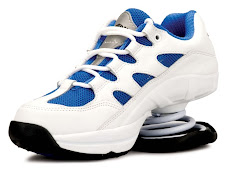
  • Use shoes that have an added arch support. Arch supports take the tension off the plantar fascia and help absorb shock. Z-CoiL shoes help by absorbing up to 50% of the shock to your joints caused by everyday walking. Our footwear is created with nearly an inch of soft and resilient forefront cushioning and its rocker-bottom shape gently assists your forward motion. The Z-Orthotic™ helps to support the longitudinal arch, reducing stress on the plantar fascia. The coil in the heel can also be adjusted for over-pronation (flat feet) to normalize your gait.

  • Stretch your arches. Simple exercises using household objects can stretch your plantar fascia, Achilles tendon and calf muscles.

Wednesday, August 19, 2009

How Z-CoiL Footwear Can Ease Your Back Pain

According to the American Chiropractic Association, 80% of the population will experience a back problem at some point in their lives, and half of all working Americans admit to having back pain symptoms each year. The back is a complicated structure of bones, joints, ligaments, and muscles. You can sprain ligaments, strain muscles, rupture disks, and irritate joints, all of which can lead to back pain. In addition, arthritis, poor posture, obesity, and psychological stress can cause or complicate back pain. Back pain can also directly result from disease of the internal organs, such as kidney stones, kidney infections, blood clots, or bone loss.

How Z-CoiL® footwear can help:
The shock-absorbing heel in Z-CoiL® footwear, in conjunction with thick forefoot cushioning, reduces impact to the body by up to 50% compared to conventional shoes. The built-in Z-Orthotic™ also promotes good posture, which relieves further stress on your back, while rocker-bottom soles in the shoes help you maintain a smooth gait as you walk.


Test out a pair of Z-CoiL shoes for yourself and feel the difference! Z-CoiL Store Locator

Monday, July 13, 2009

Overworked Muscles? Soothe them with this quick tip!

Soreness that comes a day or two after you exercise is called delayed-onset muscle soreness, but you probably know it as plain old pain. The delayed ache is caused by tiny tears in the muscle that become inflamed. It’s a signal from your body to slow down and take a rest.

To quickly soothe those aching muscles run a warm bath and pop four antacid tablets into the water and soak your body for 20 minutes. When muscles are overextended, they swell, impeding blood flow and causing pain. Antacid tablets contain sodium bicarbonate, which gets blood circulating again. They also contain aspirin, which helps ease pain even when applied topically.

You can prevent sore muscles by warming up before you exercise and cooling down afterward, advises Jacob Schor, N.D., a naturopathic doctor in Denver and president of the Colorado Association of Naturopathic Doctors. Include at least a few minutes of movement with each of the major muscle groups—the calves, thighs, hips, back, abdomen, chest, and arms.