Showing posts with label Medical Care. Show all posts

Monday, August 24, 2009

Plantar Fasciitis – an Overview

What is Plantar Fasciitis?

Plantar fasciitis is the most common cause of heel pain. The plantar fascia is the flat band of tissue (ligament) that connects your heel bone to your toes. It supports the arch of your foot. If you strain your plantar fascia, it gets weak, swollen, and irritated (inflamed). Then your heel or the bottom of your foot hurts when you stand or walk.

Plantar fasciitis causes stabbing pain that usually occurs with your very first steps in the morning. Once your foot limbers up, the pain of plantar fasciitis normally decreases, but it may return after long periods of standing or after getting up from a seated position.

Plantar fasciitis is particularly common in people who are on their feet a lot, such as athletes and soldiers. People who are overweight, women who are pregnant and those who wear shoes with inadequate support, are also at a higher risk of plantar fasciitis.


What Causes Plantar Fasciitis?

Under normal circumstances, your plantar fascia acts like a shock-absorbing bowstring, supporting the arch in your foot. But, if tension on that bowstring becomes too great, it can create small tears in the fascia. Repetitive stretching and tearing can cause the fascia to become irritated or inflamed. Plantar fasciitis is caused by straining the ligament that supports your arch, which can lead to pain and swelling. This is more likely to happen if:
  • Your feet roll inward too much when you walk (excessive pronation).

  • You have high arches or flat feet.

  • You walk, stand, or run for long periods of time, especially on hard surfaces.

  • You are overweight.

  • You wear shoes that don't fit well or are worn out.

  • You have tight Achilles tendons or calf muscles.

What are the Symptoms?

In most cases, the pain associated with plantar fasciitis:

  • Develops gradually

  • Affects just one foot, although it can occur in both feet simultaneously

  • Is worst with the first few steps after awakening, although it also can be triggered by long periods of standing or getting up from a seated position

  • Feels like a sharp pain in the heel of your foot

What are the Risk Factors?

Factors that may increase your risk of developing plantar fasciitis include:

  • Age. Plantar fasciitis is most common between the ages of 40 and 60.

  • Sex. Women are more likely than men to develop plantar fasciitis.

  • Certain types of exercise. Activities that place a lot of stress on your heel and attached tissue — such as long-distance running, ballet dancing and dance aerobics — can contribute to an earlier onset of plantar fasciitis.

  • Faulty foot mechanics. Being flat-footed, having a high arch or even having an abnormal pattern of walking can adversely affect the way weight is distributed when you're standing, putting added stress on the plantar fascia.

  • Obesity. Excess pounds put extra stress on your plantar fascia.

  • Occupations that keep you on your feet. People with occupations that require a lot of walking or standing on hard surfaces — such as factory workers, teachers and waitresses — can damage their plantar fascia.

  • Improper shoes. Shoes that are thin soled, loose, or lack arch support or the ability to absorb shock don't protect your feet. If you regularly wear shoes with high heels, your Achilles tendon — which is attached to your heel — can contract and shorten, causing strain on the tissue around your heel.

Keep in mind, ignoring plantar fasciitis may result in a chronic condition that hinders your regular activities. You may also develop foot, knee, hip or back problems because of the way plantar fasciitis changes your walking motion.

Lifestyle and Home Remedies

  • Put your feet up. Stay off your feet for several days when the pain is severe.
    Apply ice. Hold a cloth-covered ice pack over the area of pain for 15 to 20 minutes three or four times a day or after activity. Or try ice massage. Freeze a water-filled paper cup and roll it over the site of discomfort for about five to seven minutes. Regular ice massage can help reduce pain and inflammation.

  • Decrease your miles. You probably won't have to permanently retire your running or walking shoes, but it's a good idea to cover shorter distances until pain subsides.
    Take up a no- or low-impact exercise. Swap swimming or bicycling in place of walking or jogging. You'll likely be able to return to your regular activities as heel pain gradually improves or disappears. However, some people find that the only way to avoid a recurring problem is to permanently modify their aerobic activities.

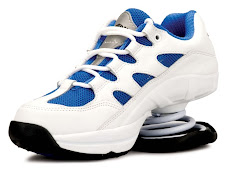
  • Use shoes that have an added arch support. Arch supports take the tension off the plantar fascia and help absorb shock. Z-CoiL shoes help by absorbing up to 50% of the shock to your joints caused by everyday walking. Our footwear is created with nearly an inch of soft and resilient forefront cushioning and its rocker-bottom shape gently assists your forward motion. The Z-Orthotic™ helps to support the longitudinal arch, reducing stress on the plantar fascia. The coil in the heel can also be adjusted for over-pronation (flat feet) to normalize your gait.

  • Stretch your arches. Simple exercises using household objects can stretch your plantar fascia, Achilles tendon and calf muscles.

Friday, July 3, 2009

The Healthiest Time to Do Everything, Pt 3

In the past few days, we have discussed the healthiest times to workout, best times to seek medical care, and the timing of prescriptions. Today, in part 3, we will look into the healthiest times to boost your energy and brain power.

Part 3 of 3 - Best times to Boost your energy and brain power


Head to bed at least 3 hours after dinner
It ensures more efficient digestion and, because eating too much food before sleeping can cause heartburn, deeper sleep, says Foresman. If you want a cocktail, have it with dinner to give your body plenty of time to metabolize the alcohol. Even if a drink makes you feel sleepy at first, just one nightcap can cause you to wake up more frequently during the night, finds a study from Wake Forest University. Imbibing too late in the evening upsets normal brain patterns, delaying REM (dream) sleep. Later, when REM rebounds, you'll be more likely to have startling, vivid, or violent dreams, which can also disturb sleep, says Joyce A. Walsleben, PhD, an associate professor at New York University's Sleep Disorders Center and coauthor of A Woman's Guide to Sleep.


Follow a sleep schedule
Several studies suggest that obeying your alarm clock can help relieve daytime fatigue. Sleep researchers are finding that people who get at least 7 hours of sleep a night are much less likely to be obese—and weight gain can act as an energy drain. Going to bed and getting up at the same time every day also keeps your biological clock on schedule. This clock, a cluster of 20,000 neurons in your brain, regulates your body's temperature, hormones, blood pressure, and other important functions. Throw it off-kilter and you could face serious health problems: Studies on night-shift workers suggest that people with irregular sleep habits have an increased risk of digestive troubles, emotional and mental problems, heart disease, and cancer, says Foresman.


Take vacation in late February or early March
And head outdoors. By March, as many as 50% of people not living in the Sun Belt will already have had a few months of winter-induced mood dips, says Matthew Edlund, MD, director of the Center for Circadian Medicine in Sarasota, FL, and author of The Body Clock Advantage. March is also the month when the more extreme psychological slump known as seasonal affective disorder, or SAD, can become overwhelming for the estimated 10 million sufferers in this country.
By taking a break somewhere sunny, you can "reverse your emotional course," reports Edlund. Warmth isn't required to garner a mood boost: Hitting the ski slopes can be as uplifting as heading south. The key is to use the great outdoors—plan an active vacation that maximizes your exposure to daylight.


Take a nap at 2 PM
The dip in body temperature that helps ease you into sleep at night also occurs midday, which is why afternoons can be so unproductive. But if you can catch a catnap around 2 PM (the slump usually hits between 1 and 3 PM), it should boost your alertness for several hours. Ten minutes will do the trick—nod off for more than 20 and you may wake feeling groggy. If a nap is out of the question, eat plenty of protein at lunch, which will give you longer-lasting energy, says Christine Gerbstadt, MD, RD, a spokesperson for the National Dietetic Association. Mid-afternoon is also a good time for "strategic caffeine use," says Brian Foresman, DO, director of the Sleep Medicine and Circadian Biology Program at Indiana University School of Medicine. "If you don't exceed a cup or two per day, caffeine works phenomenally well at increasing your alertness." This should be your last cup of coffee for the day, though—any caffeine consumed within 7 hours of bedtime can disrupt your sleep.


Pay bills or do a crossword between 10 and 11 AM or 8 and 9 PM
“According to our circadian rhythms, that's when we're maximally alert," says Michael Thorpy, MD, director of the Sleep-Wake Disorders Center at Montefiore Medical Center in the Bronx. Try not to waste a minute—the brain boost lasts only for about an hour.


That concludes our Healthiest Times to Do Everything article. Hope you enjoyed them!

Courtesy: Prevention.com

Thursday, July 2, 2009

The Healthiest Time to Do Everything, Pt 2

Today, we continue our Healthiest Times article with a few medical and prescription tips.

Part 2 of 3, Maximize Your Medical Care

Get the first appointment of the day
"Doctors won't yet be distracted by the backlog of patients and paperwork that tends to accumulate as the day goes on," says Mark Murray, MD, owner of a health care consulting firm in Sacramento. Can't get an early morning appointment? Try for right after the doctor's lunch hour. If your physician also performs surgery, make sure you're scheduled for a day when she's exclusively seeing patients. "Any time doctors are switching lanes, like coming back to the office from surgery, they're going to get slammed with a bottleneck of work that demands their immediate attention," he adds.


Test your cholesterol twice a year
To get a complete picture of your lipid levels, have them checked once in the summer and then again in December, recommends Ira Ockene, MD, a professor of preventive cardiology at the University of Massachusetts Medical School. His research shows that cholesterol levels fluctuate between the seasons and generally tend to peak midwinter, especially in women. Though the average change from July to January is only 4 points, it can be enough to indicate that you need treatment. The average of your high and low scores is the number to act on.

Arrange your elective surgery for winter or spring
Avoid July, August, and September, when teaching hospitals are flooded with med students starting their residencies, the on-the-job-training part of their medical education. A study by the National Bureau of Economic Research found that the average length of stay at major teaching hospitals increases by 2% during those months; the average mortality rate increases by 4%. This accounts for an additional 1,500 to 2,750 deaths per year nationwide. "You're better off giving interns at least 3 months to learn the ropes of the hospital," says Murray.


Have head-to-toe skin exams in December
You're less likely to be tanned, so "the higher contrast between your skin and pigmented lesions will make it easier for physicians to spot anything suspicious," says Andrew Kaufman, MD, a dermatologic surgeon in Thousand Oaks, CA, who specializes in skin cancer. But don't wait to see a doctor if you notice something abnormal. "Most changes turn out to be insignificant," he adds, "but it's better to be safe."

Fill your prescription midmonth
Drugstores get busy at the beginning of the month, when welfare and Social Security checks hit people's mailboxes. You're not merely saving yourself from a longer line: Fatalities due to pharmacy-related medication errors rise by as much as 25% at the beginning of the month, found a study at the University of California, San Diego, and Tufts University School of Medicine.


Take birth control or heart pills before bed
If you take blood pressure medication before turning in, it will still be working by early morning, which is the time associated with a 30 to 50% increased risk of heart attacks and strokes, according to researchers at the Mayo Clinic. And because the liver revs up cholesterol production overnight, you'll maximize the lipid-lowering ability of statins such as Lipitor, Zocor, Pravachol, Mevacor, and Crestor if you take them before hitting the sack. Popping your birth control pill at night makes sense because you'll sleep through any nausea, a common side effect.

Swallow your multi with a meal
Your body absorbs vitamins better when you take them with food, says Jeffrey Blumberg, PhD, a professor of nutrition at Tufts University. This will minimize the potential for stomach upset, too, and make you more likely to remember your multi every day.


Stay tuned for part 3 of our Healthiest Times to do Everything, where we list tips for boosting energy and brain power!
Courtesy: Prevention.com