Showing posts with label Fast Facts. Show all posts

Wednesday, December 9, 2009

Stop Back Pain With These Top Tips


How to Ease Your Backache
Roughly 8 out of 10 people suffer from back pain at some point during their lives. Women, in particular, are prone to posture and back problems—thanks to toting around outrageously heavy purses, going through pregnancy, or giving one-hip rides to kids. Whether you’re in the midst of fighting the ache or just want to prevent it, here are some expert-endorsed quick-and-easy ways to wage your war.


Pass the broccoli, please
You know that calcium is key for strong bones, but Japanese researchers have identified something else you need: vitamin K. It’s believed that the vitamin, found in broccoli, spinach, and other dark leafy greens, helps calcium deposit in the bones, making them denser. The stronger your bones, the stronger your whole body—and the lower your chances of an injury that could cause back pain.


Lighten your load
If your purse or briefcase tips the scales at more than 10 percent of your weight, it’s too heavy. And you need to carry it right. Your best bet is a model with a long strap that lets you position it across your chest like a messenger bag. Can’t part with your shorter-strapped number? Switch shoulders every 20 minutes.

Sleep right
A harder bed may not be better for your back. A recent study in Spine found that people who slept on softer beds reported less lower-back pain than those who snoozed on harder ones. Pillows? Yours shouldn’t raise your head out of alignment with your spine. How to tell: If you’re a back sleeper, your chin shouldn’t press into your chest. If you’re a side sleeper, it shouldn’t curve up toward your shoulder.

Tighten those abs
Having strong core muscles (we’re talking abs here) can help protect your back from injury. Do this core-strengthening pelvic tilt 2 to 3 times per week: Lie on your back with knees bent, feet flat on the floor, and lower back flattened. Pull in your belly button toward your spine, contracting your abs; your pelvis should lift slightly off the floor.

Aim for good posture
Sitting at a desk for eight (or more) hours a day can really do a number on your back. Make sure to sit with your back against your chair (get a lumbar pillow if you chair doesn’t allow this) and both feet flat on the floor.


How Z-CoiL® footwear can help
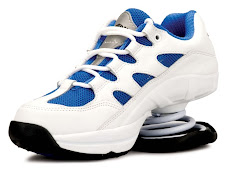
The shock-absorbing heel in Z-CoiL footwear, in conjunction with thick forefoot cushioning, reduces impact to the body by up to 50% compared to conventional shoes. The built-in Z-Orthotic also promotes good posture, which relieves further stress on your back, while rocker-bottom soles in the shoes help you maintain a smooth gait as you walk. Check out our full line of Z-CoiL Footwear:
www.zcoil.com

Wednesday, September 30, 2009

Pop Quiz: Which Food Boosts Your Bones?

Question: Which food boosts your bones?

A) Nuts
B) Milk
C) Onions
D)Whole Wheat Bread


Answer: ALL OF THEM!

Foods such as milk that contain calcium and vitamin D aren’t the only ones that strengthen your skeleton. New research shows that two other compounds, inulin (found in onions and wheat, as well as in asparagus, artichokes, and bananas) and phytate (in nuts and whole grains), are also key. Inulin boosts calcium absorption, and phytate prevents bone mineral destruction. Spanish researchers found that people who ate phytate less than 3 times a week had the lowest bone mineral densities, a risk factor for osteoporosis.

Bottom line: A diverse diet with lots of veggies and whole grains is crucial for healthy bones too.

Prevention.com

Saturday, September 12, 2009

4 Ways to Avoid Catching the Flu

Whether or not you get a flu shot, try these tricks to lower your chances of getting grounded by the flu, as well as to prevent colds and other infections.

Wash, over and over
Your hands need attention. Use plain old soap and water, and make sure to rub vigorously for 15 to 20 seconds. I have a friend who sings the "Happy Birthday" song in his head to make sure he is washing his hands long enough.

Avoid crowds
The flu virus thrives on socializing. Do more shopping online than at the mall, and try to cover your face if someone sneezes near you.

Keep hydrated
Membranes in your nose and throat trap viruses and move them back out in the form of mucus. Drink lots of fluids and gargle to keep your membranes in fighting shape, says Neil Schachter, MD, author of The Good Doctor’s Guide to Colds and Flu. But avoid humidifiers; they can spread germs.

Do vitamins
Vitamin C may not fight off colds, but several experts still recommend it for keeping you healthy during flu season. Vitamin D and selenium may guard against the flu, too. Foods like orange juice or yogurt are usually fortified with vitamin D. And OJ has plenty of C. Brazil nuts and beef have loads of selenium.
Courtesy of Health.com

Tuesday, August 18, 2009

5 Tips To Ease Back Pain


Roughly 8 out of 10 people suffer from back pain at some point during their lives. Women, in particular, are prone to posture and back problems—thanks to toting around outrageously heavy purses, going through pregnancy, or giving one-hip rides to kids. Whether you’re in the midst of fighting the ache or just want to prevent it, here are some expert-endorsed quick-and-easy ways to wage your war.

Pass the broccoli, please
You know that calcium is key for strong bones, but Japanese researchers have identified something else you need: vitamin K. It’s believed that the vitamin, found in broccoli, spinach, and other dark leafy greens, helps calcium deposit in the bones, making them denser. The stronger your bones, the stronger your whole body—and the lower your chances of an injury that could cause back pain.

Lighten your load
If your purse or briefcase tips the scales at more than 10 percent of your weight, it’s too heavy. And you need to carry it right. Your best bet is a model with a long strap that lets you position it across your chest like a messenger bag. Can’t part with your shorter-strapped number? Switch shoulders every 20 minutes.

Sleep right
A harder bed may not be better for your back. A recent study in Spine found that people who slept on softer beds reported less lower-back pain than those who snoozed on harder ones.
Pillows? Yours shouldn’t raise your head out of alignment with your spine. How to tell: If you’re a back sleeper, your chin shouldn’t press into your chest. If you’re a side sleeper, it shouldn’t curve up toward your shoulder.

Tighten those abs
Having strong core muscles (we’re talking abs here) can help protect your back from injury. Do this core-strengthening pelvic tilt 2 to 3 times per week: Lie on your back with knees bent, feet flat on the floor, and lower back flattened. Pull in your belly button toward your spine, contracting your abs; your pelvis should lift slightly off the floor. Do 2 to 3 sets of 12 reps.

Aim for good posture
Sitting at a desk for eight (or more) hours a day can really do a number on your back. Make sure to sit with your back against your chair (get a lumbar pillow if you chair doesn’t allow this) and both feet flat on the floor. Another option: Try using a stability ball as your desk chair. Start off slow (20 minutes at a time), and if it feels good, stick with it.


Courtesy Health.com

Thursday, August 6, 2009

Tips on Staying Social

How can we ensure that strong human connections continue to be an integral part of our lives as we age? Aging experts recommend staying involved in religious and community functions, maintaining a network of friends and family with whom we regularly interact, and volunteering in organizations that get us out and among other people. Here are just some of the options available for staying connected:
  • Pursue social activities, like wine tastings, lecture programs, or traveling with friends.
  • Get involved in projects that require you to have regular contact with others, like planning a gathering for a club, organizing a card- or game-playing night with friends, or helping out with a church supper.

  • Investigate the options for social interactions available in your community — take advantage of programs and services offered at community and senior centers.

  • Seek out people who may share your interests by getting involved at your place of worship, in clubs, and in other organizations.

  • Volunteer for a cause you believe in by contacting a local nonprofit organization, such as a charity you find meaningful, or a local school or museum.
  • Get connected while you improve your health: Join a walking or biking club or your local fitness center, go out golfing, or take yoga or cooking classes.
  • Take an adult-education or college course in something that interests you — you might be amazed at how much you enjoy going back to school!

  • Consider animal companionship, too. Furry, finned, and feathered friends can bring great joy, love, and meaning into our lives. Animal shelters are full of potential companions looking for good homes. (They can also be great places to volunteer.)

Courtesy of aarp.com

There are many resources to help you connect with opportunities for social interaction in your community. And once you get going, you may find you’re having so much fun it’s hard to stop!

Have any other great ideas that are not listed? Please add your comments.

Wednesday, August 5, 2009

More Reason to Connect

Not only is it fun to spend time shopping with friends or visiting with loved ones—researchers now know that time can also help keep your brain healthy as you age.

Some research indicates that people who have good social networks live longer. They also are physically healthier than people who are socially isolated. In fact, experts say that how socially connected a person tends to be is one of the most important ways of predicting his or her health and independence in later years.Maintaining supportive relationships is an important element of effective aging. The more contact we have with others as we age, the better we may be at retaining mental sharpness.

A large study reported in the New England Journal of Medicine found that people who engaged in leisure activities such as learning to play a musical instrument or dancing were less likely to develop dementia.Dancing may be especially beneficial to the brain because it combines physical activity with social interaction, and often involves a cognitive challenge in learning dance steps.

“There’s a lot of evidence that other people are the most unpredictable things you can encounter,” says Lawrence Katz. “So activities that have you engaging with other human beings are a fantastic form of brain exercise.”Other studies suggest that people with the most limited social connections are twice as likely to die over a given period as those with the widest social networks. Many experts believe that social isolation may create a chronically stressful condition that accelerates aging.

This information is especially important to older people, who may be more likely to lead solitary lives—especially if family and friends have moved away or died. Of course, combating loneliness requires time and energy, both in establishing new relationships and in deepening existing ones. But the benefits are well worth the effort.

Stop back tomorrow for Tips on Staying Social!

Courtesy of aarp.com

Monday, July 13, 2009

Overworked Muscles? Soothe them with this quick tip!

Soreness that comes a day or two after you exercise is called delayed-onset muscle soreness, but you probably know it as plain old pain. The delayed ache is caused by tiny tears in the muscle that become inflamed. It’s a signal from your body to slow down and take a rest.

To quickly soothe those aching muscles run a warm bath and pop four antacid tablets into the water and soak your body for 20 minutes. When muscles are overextended, they swell, impeding blood flow and causing pain. Antacid tablets contain sodium bicarbonate, which gets blood circulating again. They also contain aspirin, which helps ease pain even when applied topically.

You can prevent sore muscles by warming up before you exercise and cooling down afterward, advises Jacob Schor, N.D., a naturopathic doctor in Denver and president of the Colorado Association of Naturopathic Doctors. Include at least a few minutes of movement with each of the major muscle groups—the calves, thighs, hips, back, abdomen, chest, and arms.

Friday, July 3, 2009

The Healthiest Time to Do Everything, Pt 3

In the past few days, we have discussed the healthiest times to workout, best times to seek medical care, and the timing of prescriptions. Today, in part 3, we will look into the healthiest times to boost your energy and brain power.

Part 3 of 3 - Best times to Boost your energy and brain power


Head to bed at least 3 hours after dinner
It ensures more efficient digestion and, because eating too much food before sleeping can cause heartburn, deeper sleep, says Foresman. If you want a cocktail, have it with dinner to give your body plenty of time to metabolize the alcohol. Even if a drink makes you feel sleepy at first, just one nightcap can cause you to wake up more frequently during the night, finds a study from Wake Forest University. Imbibing too late in the evening upsets normal brain patterns, delaying REM (dream) sleep. Later, when REM rebounds, you'll be more likely to have startling, vivid, or violent dreams, which can also disturb sleep, says Joyce A. Walsleben, PhD, an associate professor at New York University's Sleep Disorders Center and coauthor of A Woman's Guide to Sleep.


Follow a sleep schedule
Several studies suggest that obeying your alarm clock can help relieve daytime fatigue. Sleep researchers are finding that people who get at least 7 hours of sleep a night are much less likely to be obese—and weight gain can act as an energy drain. Going to bed and getting up at the same time every day also keeps your biological clock on schedule. This clock, a cluster of 20,000 neurons in your brain, regulates your body's temperature, hormones, blood pressure, and other important functions. Throw it off-kilter and you could face serious health problems: Studies on night-shift workers suggest that people with irregular sleep habits have an increased risk of digestive troubles, emotional and mental problems, heart disease, and cancer, says Foresman.


Take vacation in late February or early March
And head outdoors. By March, as many as 50% of people not living in the Sun Belt will already have had a few months of winter-induced mood dips, says Matthew Edlund, MD, director of the Center for Circadian Medicine in Sarasota, FL, and author of The Body Clock Advantage. March is also the month when the more extreme psychological slump known as seasonal affective disorder, or SAD, can become overwhelming for the estimated 10 million sufferers in this country.
By taking a break somewhere sunny, you can "reverse your emotional course," reports Edlund. Warmth isn't required to garner a mood boost: Hitting the ski slopes can be as uplifting as heading south. The key is to use the great outdoors—plan an active vacation that maximizes your exposure to daylight.


Take a nap at 2 PM
The dip in body temperature that helps ease you into sleep at night also occurs midday, which is why afternoons can be so unproductive. But if you can catch a catnap around 2 PM (the slump usually hits between 1 and 3 PM), it should boost your alertness for several hours. Ten minutes will do the trick—nod off for more than 20 and you may wake feeling groggy. If a nap is out of the question, eat plenty of protein at lunch, which will give you longer-lasting energy, says Christine Gerbstadt, MD, RD, a spokesperson for the National Dietetic Association. Mid-afternoon is also a good time for "strategic caffeine use," says Brian Foresman, DO, director of the Sleep Medicine and Circadian Biology Program at Indiana University School of Medicine. "If you don't exceed a cup or two per day, caffeine works phenomenally well at increasing your alertness." This should be your last cup of coffee for the day, though—any caffeine consumed within 7 hours of bedtime can disrupt your sleep.


Pay bills or do a crossword between 10 and 11 AM or 8 and 9 PM
“According to our circadian rhythms, that's when we're maximally alert," says Michael Thorpy, MD, director of the Sleep-Wake Disorders Center at Montefiore Medical Center in the Bronx. Try not to waste a minute—the brain boost lasts only for about an hour.


That concludes our Healthiest Times to Do Everything article. Hope you enjoyed them!

Courtesy: Prevention.com

Thursday, July 2, 2009

The Healthiest Time to Do Everything, Pt 2

Today, we continue our Healthiest Times article with a few medical and prescription tips.

Part 2 of 3, Maximize Your Medical Care

Get the first appointment of the day
"Doctors won't yet be distracted by the backlog of patients and paperwork that tends to accumulate as the day goes on," says Mark Murray, MD, owner of a health care consulting firm in Sacramento. Can't get an early morning appointment? Try for right after the doctor's lunch hour. If your physician also performs surgery, make sure you're scheduled for a day when she's exclusively seeing patients. "Any time doctors are switching lanes, like coming back to the office from surgery, they're going to get slammed with a bottleneck of work that demands their immediate attention," he adds.


Test your cholesterol twice a year
To get a complete picture of your lipid levels, have them checked once in the summer and then again in December, recommends Ira Ockene, MD, a professor of preventive cardiology at the University of Massachusetts Medical School. His research shows that cholesterol levels fluctuate between the seasons and generally tend to peak midwinter, especially in women. Though the average change from July to January is only 4 points, it can be enough to indicate that you need treatment. The average of your high and low scores is the number to act on.

Arrange your elective surgery for winter or spring
Avoid July, August, and September, when teaching hospitals are flooded with med students starting their residencies, the on-the-job-training part of their medical education. A study by the National Bureau of Economic Research found that the average length of stay at major teaching hospitals increases by 2% during those months; the average mortality rate increases by 4%. This accounts for an additional 1,500 to 2,750 deaths per year nationwide. "You're better off giving interns at least 3 months to learn the ropes of the hospital," says Murray.


Have head-to-toe skin exams in December
You're less likely to be tanned, so "the higher contrast between your skin and pigmented lesions will make it easier for physicians to spot anything suspicious," says Andrew Kaufman, MD, a dermatologic surgeon in Thousand Oaks, CA, who specializes in skin cancer. But don't wait to see a doctor if you notice something abnormal. "Most changes turn out to be insignificant," he adds, "but it's better to be safe."

Fill your prescription midmonth
Drugstores get busy at the beginning of the month, when welfare and Social Security checks hit people's mailboxes. You're not merely saving yourself from a longer line: Fatalities due to pharmacy-related medication errors rise by as much as 25% at the beginning of the month, found a study at the University of California, San Diego, and Tufts University School of Medicine.


Take birth control or heart pills before bed
If you take blood pressure medication before turning in, it will still be working by early morning, which is the time associated with a 30 to 50% increased risk of heart attacks and strokes, according to researchers at the Mayo Clinic. And because the liver revs up cholesterol production overnight, you'll maximize the lipid-lowering ability of statins such as Lipitor, Zocor, Pravachol, Mevacor, and Crestor if you take them before hitting the sack. Popping your birth control pill at night makes sense because you'll sleep through any nausea, a common side effect.

Swallow your multi with a meal
Your body absorbs vitamins better when you take them with food, says Jeffrey Blumberg, PhD, a professor of nutrition at Tufts University. This will minimize the potential for stomach upset, too, and make you more likely to remember your multi every day.


Stay tuned for part 3 of our Healthiest Times to do Everything, where we list tips for boosting energy and brain power!
Courtesy: Prevention.com

Wednesday, July 1, 2009

The Healthiest Time to Do Everything, Pt 1

It’s true: Timing is everything, especially when it comes to your health. Proper planning can mean the difference between getting sick and staying healthy. Consider that a flu shot offers the most protection if you get it in late October or early November, before flu season gets under way, or that a cold sore will heal 18 to 21% faster if you take a dose of antiviral medication as soon as you feel the first tingle. Before you make another health move, check the tips that follow and then consult your watch or calendar. You can't afford not to.

Part 1 of 3 - Get the Most From Your Workout


Do cardio in the early morning
Ultimately, the best time to exercise is when you'll actually do it, say experts at the American College of Sports Medicine. That's one reason for scheduling it early in the day. You have fewer distractions and, if something does interfere, you can still reschedule for the afternoon or evening. If you exercise outdoors, you'll be happy to know that air pollution is typically lowest in the morning. And research demonstrates that working out boosts brain activity afterward—a great way to begin your day.


"Just don't exercise on empty," advises Fabio Comana, an exercise physiologist with the American Council on Exercise. "If you take a trip on a half tank of gas, how far will you get before you need to refuel?" Have a small (100- to 300-calorie) snack 30 minutes before going for a jog or bike ride.


Learn or practice a skill sport between 4 and 6 PM
Hand-eye coordination is highest then, says Edlund, so it's a good time for any form of exercise that requires a high degree of skill, like a tennis lesson or a dance class. Bonus: The activity you get now will help you sleep better later.


Start exercising in January or June
Because so many people sign up after the New Year, gyms can often afford to waive enrollment fees or give discounts in January, says Dave Reiseman, director of communications for Gold's Gym. Just schedule your visits for weekends, when clubs tend to be less busy. Another option: Jump-start your workout routine in June. Clubs sometimes offer specials then to goose flagging business during vacation season.


Begin a diet in June
"There's a seasonality to weight loss," says Edlund, "and the start of summer is the easiest time to drop pounds." Often, you'll naturally lose a pound or two when the weather warms up because of increased activity; capitalize on that initial loss by starting a full-fledged diet and exercise program. Plus, all the fresh fruits and veggies will make it easier to eat right without feeling deprived.


Tomorrow, we will discuss the best times to manage your medical care. Stay Tuned!
Courtesy: Prevention.com

Monday, June 1, 2009

Tips for Preventing Foot Pain

The American Podiatric Medical Association offers the following tips for preventing foot pain:
Don’t ignore foot pain — it’s not normal. If the pain persists, see a doctor who specializes in podiatry.
Inspect feet regularly. Pay attention to changes in color and temperature. Look for thick or discolored nails (a sign of developing fungus), and check for cracks or cuts in the skin. Peeling or scaling on the soles of feet could indicate athlete’s foot. Any growth on the foot is not considered normal.
Wash feet regularly, especially between the toes, and dry them completely.
Trim toenails straight across, but not too short. (Cutting nails in corners or on the sides increases the risk for ingrown toenails.)
Make sure shoes fit properly. Purchase new shoes later in the day when feet tend to be at their largest, and replace worn out shoes as soon as possible.
Select and wear the right shoe for specific activities (such as running shoes for running).
Alternate shoes. Don’t wear the same pair of shoes every day.
Avoid walking barefoot, which increases the risk for injury and infection. At the beach or when wearing sandals, always use sunblock on your feet, as you would on the rest of your body.
Be cautious when using home remedies for foot ailments. Self-treatment can often turn a minor problem into a major one.
It is critical that people with diabetes see a podiatric physician at least once a year for a checkup. People with diabetes, poor circulation, or heart problems should not treat their own feet, including toenails, because they are more prone to infection.


Preventing Foot Problems in Childhood
Early Development. The first year of life is important for foot development. Parents should cover their babies’ feet loosely, allowing plenty of opportunity for kicking and exercise. Change the child’s position frequently. Children generally start to walk at 10 – 18 months. They should not be forced to start walking early. Wearing just socks or going barefoot indoors helps the foot develop normally and strongly and allows the toes to grasp. Going barefoot outside, however, increases the risk for injury and other conditions, such as plantar warts.
Shoes. Children should wear shoes that are light and flexible, and since their feet tend to perspire, their shoes should be made of materials that breathe. Replace footwear every few months as the child’s feet grow. Footwear should never be handed down. Protect children’s feet if they participate in high-impact sports.

Tuesday, March 31, 2009

Lacing Techniques for a Proper Fit

Although the width, length, and size of your shoes are important, many people forget that lacing techniques are equally of value to ensure a proper fit. Many lacing techniques can be used to prevent injuries and to relieve foot problems and pain. Individuals with specific foot issues should follow lacing techniques specific to their foot characteristics to get a good shoe fit.

General Lacing Techniques:
Follow these general techniques from The American Orthopaedic Foot and Ankle Society:

  • Loosen the laces as you slip into your shoes because this prevents unnecessary stress on the eyelets and the back of your shoes.

  • Begin lacing your shoes closest to your toes, and pull the sets of eyelets, one at a time to adjust laces for a perfect fit.

  • Shoes with a large number of eyelets make it easier to adjust laces for a custom fit.

Specific Tips for Shoe Types:

  • Narrow feet: Start with the eyelets farthest from the tongue of the shoes and bring it up the side of the shoe.

  • Wide feet: Use the eyelets closest to the tongue of the shoe because this provides for more space.

  • Heel problems: By using every eyelet, make sure that the area closest to the heel is tied very tightly, while less tension is held near the toes. When you have reached the second to last eyelet on each side, start threading the lace through the top eyelet, making a small loop. Then, thread the opposite lace through each loop before tying it.

  • Narrow heel and wide forefoot: Use two laces and thread through the top half of the eyelets and the other lace through the bottom half. The laces closest to the heel should be secured more tightly than the lace closest to the toes.

Tuesday, March 3, 2009

Foot Care Myths Revealed

"Step on a crack and you'll break your mother's back."
Growing up we believed this and other old wives' tales or myths. We found them to be quite funny. But there are other myths that are no laughing matter, especially when they involve your health.

From bunions to broken bones, doctors with the American College of Foot and Ankle Surgeons (ACFAS) have heard it all. Here is a small collection of myths about foot care and the realities behind them.

Myth: It can't be broken, because I can move it.
Reality:
This widespread idea has kept many fractures from receiving proper treatment. The truth is that often you can walk with certain kinds of fractures. Some common examples: Breaks in the smaller, outer bone of the lower leg, small chip fractures of either the foot or ankle bones, and the often neglected fracture of the toe.

Myth: Applying an elastic bandage to a severely sprained ankle is adequate treatment.
Reality: Ankle sprains often mean torn or severely overstretched ligaments, and they should receive immediate care. X-ray examination, immobilization by casting or splinting, and physiotherapy to ensure a normal recovery all may be indicated. Surgery may even be necessary.

Myth: Cutting a notch (a "V") in a toenail will relieve the pain of ingrown toenails.
Reality: When a toenail is ingrown, the nail curves downward and grows into the skin. Cutting a "V" does not affect the growth of the toenail. New nail growth will continue to curve downward. Cutting a "V" may actually cause more problems and is painful in many cases.

Myth: The terms 'fracture,' 'break,' and 'crack' are all different.
Reality: All of those words are proper in describing a broken bone.

Myth: Shoes cause bunions.
Reality:
Bunions are most often caused by an inherited faulty mechanical structure of the foot. It's not the bunion itself that is inherited, but certain foot types make a person prone to developing a bunion. While wearing shoes that crowd the toes together can, over time, make bunions more painful, shoes themselves do not cause bunions.
Although some treatments can ease the pain of bunions, only surgery can correct the deformity.

Myth: If you break a toe, immediate care isn't necessary.
Reality:
A toe fracture needs prompt attention. If X-rays reveal it to be a simple, displaced fracture, care by your podiatric physician usually can produce rapid relief. However, X-rays might identify a displaced or angulated break. In such cases, prompt realignment of the fracture by your podiatric physician will help prevent improper or incomplete healing. Often, fractures do not show up in the initial X-ray. It may be necessary to X-ray the foot a second time, seven to ten days later. Many patients develop post-fracture deformity of a toe, which in turn results in a deformed toe with a painful corn. A good general rule is: Seek prompt treatment for injury to foot bones.

Myth: Corns have roots.
Reality: A corn is a small build-up of skin caused by friction. Many corns result from a hammertoe deformity, where the toe knuckle rubs against the shoe. The only way to eliminate these corns is to surgically correct the hammertoe condition.
Unlike a callus, a corn has a central core of hard material. But corns do not have roots. Attempting to cut off a corn or applying medicated corn pads can lead to serious infection or even amputation. A foot and ankle surgeon can safely evaluate and treat corns and the conditions contributing to them.

Myth: I can't get skin cancer on my feet.
Reality:
Skin cancers can occur anywhere on the body, regardless of sun exposure. Foot and ankle surgeons recommend routine foot self exams to spot suspicious moles, freckles and other spots on your feet that show the signs of melanoma.

Myth: If you have a foot or ankle injury, soak it in hot water immediately.
Reality:
Don’t use heat or hot water on an area suspect for fracture, sprain, or dislocation. Heat promotes blood flow, causing greater swelling. More swelling means greater pressure on the nerves, which causes more pain. An ice bag wrapped in a towel has a contracting effect on blood vessels, produces a numbing sensation, and prevents swelling and pain. Your podiatric physician may make additional recommendations upon examination.

Myth: Duct tape can remove a plantar wart.
Reality: Although there are many folk remedies for warts, patients should be aware that these remain unproven and may be dangerous. Patients should never try to remove a wart themselves - this can do more harm than good.

Myth: Putting cotton under an ingrown toenail will relieve the pain.
Reality: Cotton placed under the nail can be harmful. It can easily harbor bacteria and encourage infection.

Tuesday, December 16, 2008

Frequently Asked Questions about Z-CoiL® Footwear

Below is a quick list of commonly asked questions about Z-CoiL® footwear. If you have additional questions, please ask!


Benefits
What types of painful conditions may be alleviated by wearing Z-CoiL® footwear?
Z-CoiL®-wearers have reported significant relief from the pain associated with many medically-diagnosed conditions, including:

  • Heel spurs, plantar fasciitis, and metatarsal pain
  • Lower back pain and sciatica
  • Arthritis and other common joint pains

Will Z-CoiL® footwear help me jump higher?
No, but you will land softer.

How soon before I can expect results?
The relief our customers experience may be immediate, or may occur gradually, over days or even weeks. Some people enjoy complete relief from pain when wearing their Z-CoiL® shoes; others achieve only partial relief, though they may be able to reduce the amount of pain medication they take.


Functionality
Is Z-CoiL® footwear stable?
Many customers report that they actually feel more stable in their Z-CoiL® footwear than in regular shoes. The coil in the heel is cone-shaped, and so it compresses straight down, following the line of least resistance rather than tipping. The flexible coil also absorbs some surface deviations to protect the ankle.

Does it take a long time to get used to wearing Z-CoiL® footwear?
Most people get used to wearing the footwear right away. Others may take several hours or even a couple of days to adjust to the extraordinary feeling of the shoes. If this is the case, we suggest you wear your Z-CoiL® shoes for a few hours each day at first, and gradually increase that time until you feel more comfortable in them.

It is also normal to experience some soreness in your legs during the first few weeks of wearing Z-CoiL® shoes, due to the increased mobility they provide. If you continue to experience pain in your feet, ankles, knees, hips, or back while wearing your Z-CoiL® footwear, however, you should take them off and return to your Z-CoiL® distributor for a footwear adjustment.

Can objects get caught in the open coil?
Small rocks or loose materials may occasionally get caught in the coil, but they should be easy to remove with a simple shake. We do recommend caution around cords, wires, hoses, and chairs with rungs, which may catch in the coil.

Can I drive wearing Z-CoiL® footwear?
Yes, but be careful not to let the floor mat or pedals catch on the coil. Also be aware that the shoes’ thick cushioning may reduce your “feel” for the pedals. You may need to move your seat back an inch or so to compensate for the thickness of the forefoot cushioning. If you feel unsafe driving in your Z-CoiL® footwear, wear other shoes.

Can I use my Z-CoiL® footwear to play sports?
Our customers have reported using their Z-CoiL® shoes for walking, running, hiking, golf, and more, although we do not recommend them for sports that involve significant lateral movement, like tennis. You need to be the judge of how Z-CoiL® products will work for you. Many people have been able to become more active and get back in the game because of their Z-CoiL® footwear.

Can I use custom orthotics with them?
You certainly can. In fact, Z-CoiL® footwear makes an ideal footbed for custom orthotics. Skilled Z-CoiL® fitters will ensure that your prescription orthoses fit in your shoes properly. Your prescribing healthcare professional may even be able to work with the Z-CoiL® fitter to further enhance the performance of your orthotics.

Aren’t Z-CoiL® shoes considered high heels?
Not at all. The Z-CoiL® heel, when uncompressed, is only about 1/2 of an inch higher than the cushioned forefoot. When the coil compresses, an average distance of 1/8 to 1/4 of an inch, the heel is level or just slightly higher than the forefoot. This minimal heel rise is beneficial to most people, helping them achieve a healthier, more erect standing posture. In the rare event that this is not the case, the coils can be adjusted to a lower effective heel height.


Quality
How long will my Z-CoiL® shoes last?
The steel coils can last a lifetime, though the rubber heel pad will probably last between six months and two years with normal use. People who put their Z-CoiL® footwear to hard use may wear through the pad in three months, while those who go easy on their footwear have been known to wear them for several years. Fortunately, even if the heel pad does wear out, there’s no need to buy a new pair of shoes. The coil/heel pad assembly can easily be replaced by a Z-CoiL® distributor at a minimal cost.

By comparison, most running or comfort shoes with EVA or gel-based soles have a life of 200 miles or 3 months, at which time their cushioning is reduced by 50%.

Some of your shoes have optional foam heel covers; why don’t you cover up the coils on all your styles?
We do make an Enclosed Heel System™(ECS) that is optional with our Z-Duty Work Boot and Z-Walker styles. The ECS is designed to address workplace safety concerns, in environments where objects are more likely to get caught in an open coil. The molded foam material that encases the coil slows the speed at which the coil compresses, which dampens its shock-absorbing capabilities to some degree, although a stiffer coil also proves useful when a person is picking up heavy objects.

At first, many people are taken aback by the appearance of our shoes, yet those who put them on and experience incredible relief from pain soon see them in a different light!


General
Can I order Z-CoiL® footwear over the Internet or by phone? There is no Z-CoiL® store near me.
Z-CoiL® footwear is sold only through stores by authorized Z-CoiL® distributors trained in our custom-fitting process. We believe that a personalized fit is essential for maximizing the amazing pain relief benefits of our shoes. If there is no store near where you live, you may find one the next time you’re traveling. New Z-CoiL® stores are springing up all over, too; be sure to check the Store Locator on this website periodically for new locations opening in your area.

Where are Z-CoiL® shoes manufactured?
Z-CoiL footwear is headquartered in Albuquerque, New Mexico, where the products are designed and engineered. Our products are manufactured in South Korea. Al Gallegos had tried for years to find a U.S. shoe manufacturer willing to produce his unusual shoes, but they all laughed at his idea and turned him down. At last he found a willing partner in South Korea who had 20 years of experience, which included making products for Nike® and Reebok®.

Will my insurance cover some of the cost of Z-CoiL® shoes?
Because Z-CoiL® footwear is designed for pain relief and incorporates a medical-grade orthotic, you may be able to get a prescription for the footwear from your doctor and receive some level of reimbursement from your insurance company. Check your health plan to see whether your insurance covers prescription orthotics. Some employers also have safety or workplace shoe reimbursement programs. Check with your HR Department. Some Z-CoiL® distributors accept Flexible Spending Account (FSA) cards with your doctor’s prescription. You can then use your doctor’s prescription and store receipt as justification for the medical expense.

Friday, December 5, 2008

Top ten tips for a proper shoe fit

In continuing with the conversation yesterday, here are the top 10 tips for getting a proper shoe fit provided by The National Institute of Health.

  1. The size of your feet changes as you grow older so always have your feet measured before buying shoes. The best time to measure your feet is at the end of the day when your feet are largest.
  2. Most of us have one foot that is larger than the other, so fit your shoe to your larger foot.
  3. Don't select shoes by the size marked inside the shoe but by how the shoe fits your foot.
  4. Low-heeled shoes are more comfortable, safer, and less damaging than high-heeled shoes. Women should not wear a shoe with a heel higher than 2 1/4 inches.
  5. During the fitting process, make sure there is enough space (3/8" to 1/2") for your longest toe at the end of each shoe when you are standing up.
  6. Make sure the ball of your foot fits comfortably into the widest part of the shoe.
  7. Don't buy shoes that feel too tight and expect them to stretch to fit.
  8. Your heel should fit comfortably in the shoe with a minimum amount of slipping - the shoes should not ride up and down on your heel when you walk.
  9. Walk in the shoes to make sure they fit and feel right. Then take them home and spend some time walking on carpet to make sure the fit is a good one.
  10. The upper part of the shoes should be made of a soft, flexible material to match the shape of your foot. Shoes made of leather can reduce the possibility of skin irritations. Soles should provide solid footing and not be slippery. Thick soles cushion your feet when walking on hard surfaces.

Our goal here at Z-CoiL is to provide the maximum amount of pain relief that our shoes can offer our customers. As mentioned yesterday, when Z-CoiL® shoes are properly fitted, they can provide substantial, if not complete, pain relief for many conditions affecting the feet, ankles, knees, hips, and back.

Monday, November 17, 2008

Foot Pain by the Numbers

43
Millions of American adults, or one in six, who have foot problems; the ratio increases to one in three over age 65.

1,000
The average number of miles an American walks each year; two to three times total body weight is placed on the big toe during the push-off phase of walking.

1
Million pounds of pressure the feet absorb during an hour of strenuous exercise.

11
Millions of Americans who visit doctors’ offices for foot and ankle problems each year.

25
Percentage of Americans with flat feet, a condition in which the foot does not have a normal arch.

1,000
Number of Americans per year who undergo ankle replacement surgery.


76
Percentage increase in the amount of body-weight pressure on the forefoot when wearing three-inch high heels; this drops to 22 percent for one-inch heels.

.5
The amount of inches between the end of a properly fitted shoe and the longest toe.

10
Percentage of Americans who will be affected by plantar fasciitis at some point in their lifetime.

5,280
Number of feet in a mile.

2,000

Average number of steps in a mile.