Brennan's newspaper, "Brennan's Spruce St. Weekly" has been published for two years. Since he's 10 years old now, that means his talent for journalism was already blossoming at 8 years old. He does his own jokes, cartoons and hand written articles.
Monday, February 22, 2010
Kid Reporter, Brennan LaBrie, Seeks Relief With Z-CoiL Footwear
Brennan's newspaper, "Brennan's Spruce St. Weekly" has been published for two years. Since he's 10 years old now, that means his talent for journalism was already blossoming at 8 years old. He does his own jokes, cartoons and hand written articles.
Wednesday, December 9, 2009
Stop Back Pain With These Top Tips
How to Ease Your BackacheRoughly 8 out of 10 people suffer from back pain at some point during their lives. Women, in particular, are prone to posture and back problems—thanks to toting around outrageously heavy purses, going through pregnancy, or giving one-hip rides to kids. Whether you’re in the midst of fighting the ache or just want to prevent it, here are some expert-endorsed quick-and-easy ways to wage your war.
Pass the broccoli, please
You know that calcium is key for strong bones, but Japanese researchers have identified something else you need: vitamin K. It’s believed that the vitamin, found in broccoli, spinach, and other dark leafy greens, helps calcium deposit in the bones, making them denser. The stronger your bones, the stronger your whole body—and the lower your chances of an injury that could cause back pain.
If your purse or briefcase tips the scales at more than 10 percent of your weight, it’s too heavy. And you need to carry it right. Your best bet is a model with a long strap that lets you position it across your chest like a messenger bag. Can’t part with your shorter-strapped number? Switch shoulders every 20 minutes.
Sleep rightA harder bed may not be better for your back. A recent study in Spine found that people who slept on softer beds reported less lower-back pain than those who snoozed on harder ones. Pillows? Yours shouldn’t raise your head out of alignment with your spine. How to tell: If you’re a back sleeper, your chin shouldn’t press into your chest. If you’re a side sleeper, it shouldn’t curve up toward your shoulder.
Tighten those abs
Having strong core muscles (we’re talking abs here) can help protect your back from injury. Do this core-strengthening pelvic tilt 2 to 3 times per week: Lie on your back with knees bent, feet flat on the floor, and lower back flattened. Pull in your belly button toward your spine, contracting your abs; your pelvis should lift slightly off the floor.
Sitting at a desk for eight (or more) hours a day can really do a number on your back. Make sure to sit with your back against your chair (get a lumbar pillow if you chair doesn’t allow this) and both feet flat on the floor.
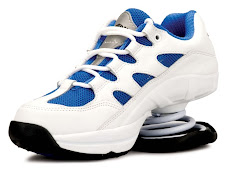
How Z-CoiL® footwear can helpThe shock-absorbing heel in Z-CoiL footwear, in conjunction with thick forefoot cushioning, reduces impact to the body by up to 50% compared to conventional shoes. The built-in Z-Orthotic also promotes good posture, which relieves further stress on your back, while rocker-bottom soles in the shoes help you maintain a smooth gait as you walk. Check out our full line of Z-CoiL Footwear: www.zcoil.com
Wednesday, August 19, 2009
How Z-CoiL Footwear Can Ease Your Back Pain
According to the American Chiropractic Association, 80% of the population will experience a back problem at some point in their lives, and half of all working Americans admit to having back pain symptoms each year. The back is a complicated structure of bones, joints, ligaments, and muscles. You can sprain ligaments, strain muscles, rupture disks, and irritate joints, all of which can lead to back pain. In addition, arthritis, poor posture, obesity, and psychological stress can cause or complicate back pain. Back pain can also directly result from disease of the internal organs, such as kidney stones, kidney infections, blood clots, or bone loss.How Z-CoiL® footwear can help:
The shock-absorbing heel in Z-CoiL® footwear, in conjunction with thick forefoot cushioning, reduces impact to the body by up to 50% compared to conventional shoes. The built-in Z-Orthotic™ also promotes good posture, which relieves further stress on your back, while rocker-bottom soles in the shoes help you maintain a smooth gait as you walk.
Tuesday, August 18, 2009
5 Tips To Ease Back Pain

Pass the broccoli, please
You know that calcium is key for strong bones, but Japanese researchers have identified something else you need: vitamin K. It’s believed that the vitamin, found in broccoli, spinach, and other dark leafy greens, helps calcium deposit in the bones, making them denser. The stronger your bones, the stronger your whole body—and the lower your chances of an injury that could cause back pain.
Lighten your load
If your purse or briefcase tips the scales at more than 10 percent of your weight, it’s too heavy. And you need to carry it right. Your best bet is a model with a long strap that lets you position it across your chest like a messenger bag. Can’t part with your shorter-strapped number? Switch shoulders every 20 minutes.
Sleep right
A harder bed may not be better for your back. A recent study in Spine found that people who slept on softer beds reported less lower-back pain than those who snoozed on harder ones.
Pillows? Yours shouldn’t raise your head out of alignment with your spine. How to tell: If you’re a back sleeper, your chin shouldn’t press into your chest. If you’re a side sleeper, it shouldn’t curve up toward your shoulder.
Tighten those abs
Having strong core muscles (we’re talking abs here) can help protect your back from injury. Do this core-strengthening pelvic tilt 2 to 3 times per week: Lie on your back with knees bent, feet flat on the floor, and lower back flattened. Pull in your belly button toward your spine, contracting your abs; your pelvis should lift slightly off the floor. Do 2 to 3 sets of 12 reps.
Aim for good posture
Sitting at a desk for eight (or more) hours a day can really do a number on your back. Make sure to sit with your back against your chair (get a lumbar pillow if you chair doesn’t allow this) and both feet flat on the floor. Another option: Try using a stability ball as your desk chair. Start off slow (20 minutes at a time), and if it feels good, stick with it.
Monday, July 13, 2009
Overworked Muscles? Soothe them with this quick tip!
To quickly soothe those aching muscles run a warm bath and pop four antacid tablets into the water and soak your body for 20 minutes. When muscles are overextended, they swell, impeding blood flow and causing pain. Antacid tablets contain sodium bicarbonate, which gets blood circulating again. They also contain aspirin, which helps ease pain even when applied topically.
You can prevent sore muscles by warming up before you exercise and cooling down afterward, advises Jacob Schor, N.D., a naturopathic doctor in Denver and president of the Colorado Association of Naturopathic Doctors. Include at least a few minutes of movement with each of the major muscle groups—the calves, thighs, hips, back, abdomen, chest, and arms.
Friday, May 15, 2009
The Mommy Brain Reports (and one of Walmart's 11 Moms) reviews Z-CoiL Shoes

Monica Brady from the Mommy Brain Reports has written a great reivew for our footwear.
Check out the complete article and her other great posts on her blog: http://www.mommybrainreports.com/1579/review-z-coil-shoes/
I’m always on the lookout for the coolest things around, and this review is no exception!I was watching The Doctors one day, and they had on a pair of interesting looking shoes, that they claimed made them stand a little taller, and helped their posture. They also explained how these shoes acted like shock absorbers for their bodies. I thought that had to be a gimmick, but I was willing to try them, so I contacted Z-coil and explained how my back, knees, and hips have hurt since carrying my twins, and my husband’s back and knees have hurt him from all of the running he did while in the Marine Corps. They actually agreed to give us each a pair of shoes… But it wasn’t something they could just send us. We had to go to a local authorized dealer to get custom fitted for our Z-coil shoes. We soon learned why we have to be custom fitted for these shoes. There are so many things that could be adjusted. The coil in the heel can be softer or stronger, or even turned to help with pronation. He had a computer there that he had us stand on to measure where we put pressure on our feet. We then walked across it to see how our feet hit the ground. I got to see how I put a lot of pressure on my big toe when I stood, and hit the ground hard with my heel when I walked. This totally explained why I had so much trouble when I tried to run. My knees, ankles, hips and lower back were always hurting after I tried to jog for even a couple of minutes on the treadmill. Gordon was able to look at these charts and use the data to truly customize our shoes for us. As far as my shoes go, he did turn one of the coils to help me stabilize one of my ankles, and he added some extra pads at my heel and the ball of my foot to reduce some of the impact when I walk.
It’s now been 2 months since I’ve had these shoes, and I have to say that they have helped me out a lot. I’ve been able to jog a little. I’ve noticed a majority of my lower joint pain has lessened and even some of it has gone away. My hubby has also liked wearing his shoes when we go out for the weekends and are doing a lot of walking around.
Friday, January 23, 2009
Z-CoiL Testimonial of the Month - January 2009
Heidi
Thursday, November 13, 2008
Preventative Care for Common Foot Problems
In a recent survey for the American Podiatric Medical Association, 53 percent of respondents reported foot pain so severe that it hampered their daily function. On average, people develop pain in their 60s, but it can start as early as the 20s and 30s. Yet, even armed with this knowledge, most people do not take preventative measures to care for their feet.
I was recently reading a very informative article by L. Tarkan from The New York Times. In it she discusses the most common foot problems that are associated with aging and whether you should take actions now to prevent them. Here are just a few:
Are you overweight?
The force on your feet is about 120% of your weight. “Obesity puts a great amount of stress on all the supporting structures of the foot,” said Dr. Bart Gastwirth, a podiatrist at the University of Chicago. It can lead to plantar fasciitis and heel pain and can worsen hammertoes and bunions. It’s also a risk factor for diabetes, leading to the next question.
Are you diabetic?
Being farthest from the heart, the feet can be the first part of the body to manifest complications like poor circulation and loss of feeling, both of which can lead to poor wound healing and amputation. Diabetics should have their feet examined annually by a doctor and avoid shoes that cause abrasions and pressure.
Do you have flat feet or high arches?
Either puts feet at risk. A flat foot is squishy, causing muscles and tendons to stretch and weaken, leading to tendonitis and arthritis. A high arch is rigid and has little shock absorption, putting more pressure on the ball and heel of the foot, as well as on the knees, hips and back. Shoes or orthotics that support the arch and heel can help flat feet. People with high arches should look for roomy shoes and softer padding to absorb the shock. Isometric exercises also strengthen muscles supporting the foot.
Do your shoes fit?
In the podiatric association’s survey, more than 34 percent of men said they could not remember the last time their feet were measured. Twenty percent of women said that once a week they wore shoes that hurt, and 8 percent wore painful shoes daily. Feet flatten and lengthen with age, so if you are clinging to the shoe size you wore at age 21, get your feet measured (especially mothers — pregnancy expands feet).
Do you wear high heels?
“The high heel concentrates the force on the heel and the forefoot,” Dr. Gastwirth said. Heels contribute to hammertoes, neuromas (pinched nerves near the ball of the foot), bunions and “pump bump” (a painful bump on the back of the heel), as well as toenail problems. Most of the time, wear heels that are less than two and a half inches high.
- Arthritis and other common joint pains
- Lower back pain and sciatica
- Heel spurs, plantar fasciitis, and metatarsal pain
You can check out many of their testimonials here: http://www.zcoil.com/testimonials