Brennan's newspaper, "Brennan's Spruce St. Weekly" has been published for two years. Since he's 10 years old now, that means his talent for journalism was already blossoming at 8 years old. He does his own jokes, cartoons and hand written articles.
Monday, February 22, 2010
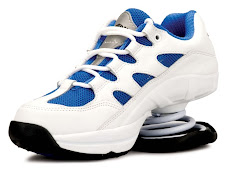
Kid Reporter, Brennan LaBrie, Seeks Relief With Z-CoiL Footwear
Brennan's newspaper, "Brennan's Spruce St. Weekly" has been published for two years. Since he's 10 years old now, that means his talent for journalism was already blossoming at 8 years old. He does his own jokes, cartoons and hand written articles.
Tuesday, February 9, 2010
Winter Fruit - Tangerine Recipes
Please enjoy! Let me know what you think of them in the comments.
Tangerine Teriyaki Tuna4 fresh tuna steaks, about 6 ounces each
INGREDIENTS:
For the marinade:
1/4 cup low-sodium soy sauce
1/4 cup fresh tangerine juice
3 strips tangerine zest
3 tablespoons honey
1 1/2 tablespoons sesame oil
3 cloves garlic, crushed
3 slices (1/4″ thick) fresh ginger, crushed
For garnish:
1 tablespoon toasted sesame seeds (ideally a mixture of black and white sesame seeds), for garnish
1/4 cup chopped scallion greens
DIRECTIONS:
1. Combine the ingredients for the marinade in a shallow mixing bowl and whisk together. Add the tuna steaks and marinate for 30 to 60 minutes, turning the steaks once or twice. Keep the bowl covered in the refrigerator.
2. Preheat the grill to high. With a slotted spatula, carefully lift the tuna steaks out of the marinade. Strain the marinade into a small saucepan and boil to a thick, syrupy glaze.
3. Lightly spray the fish steaks with non-stick cooking spray or sesame oil. Brush and oil the grill grate. Grill the fish until cooked to taste, about 4 to 6 minutes per side for medium. As each side is cooked, brush it with the glaze (the boiled marinade). Sprinkle the tuna with chopped scallion greens and sesame seeds and serve.
Serving Size: 1 tuna steak
For crust
about 30 chocolate wafers, ground fine in a blender or food processor (1 3/4 cups)
1/2 stick (1/4 cup) unsalted butter, melted
For filling
1 1/2 pounds cream cheese, softened
1 1/4 cups sugar
1 cup sour cream at room temperature
2 tablespoons freshly grated tangerine zest (from about 4 tangerines)
1/4 cup plus 2 tablespoons fresh tangerine juice
2 tablespoons Grand Marnier or other orange-flavored liqueur
1/2 teaspoon salt
1/4 cup all-purpose flour
4 large whole eggs
1 large egg yolk
For glaze:
3/4 cup tangerine marmalade (about 7 1/2 ounces)
DIRECTIONS:
For Filling:
In a small bowl stir together wafer crumbs and butter until combined well. Pat crumb mixture onto bottom and 1 inch up side of a 9-inch springform pan and chill crust 30 minutes.
Make filling:
Preheat oven to 300°F.
In a bowl with an electric mixer beat cream cheese until light and fluffy. Beat in sugar gradually until mixture is combined well. Beat in sour cream, zest, juice, liqueur, salt, and flour. Beat in whole eggs and yolk, 1 at a time, beating well after each addition.
Wrap bottom and side of springform pan with three 14- by 12-inch pieces of foil, 1 at a time, arranging each piece in a different position to make sure foil is at least 1 1/2 inches up side all around. Put pan in a large baking dish and pour filling into crust. Put dish in middle of oven and with a measuring cup slowly add enough water to it to reach 1/4 inch up side of springform pan, being careful not to let any water inside foil. (Cooling in water bath prevents cheesecake surface from cracking.)
Bake cheesecake 1 hour 15 minutes, or until edges are just set but middle still trembles slightly. Turn off oven and let cheesecake stand 1 hour (cheesecake will continue to set as it stands). Remove dish from oven carefully and transfer cheesecake in pan to a rack to cool completely. Remove foil and chill cheesecake, covered loosely, 6 hours or overnight.
Make glaze:
In a small saucepan melt marmalade over moderate heat, stirring, and cool to warm.
Remove side of springform pan and spread marmalade evenly on top of cheesecake. Chill cheesecake 2 hours (glaze will soften if served at room temperature).
Monday, February 8, 2010
Winter Fruit Spotlight – Tangerine Dream!
I was discussing the limited selections of winter fruit the other day with a friend when we realized there was actually quite a plethora of wintertime goodness available (outside of the ol’ standby – apples). After some discussion, we agreed that one of our favorites was the lovely tangerine.A tangerine is a citrus fruit, Citrus reticulata, which is smaller and less sweet than a classic orange. They are an excellent source of vitamin C and a good source of fiber and folate. The fruits are sometimes considered excellent pocket foods, because they are small with easily removed rinds (unlike the orange, but that may just be me…).
The tangerine is actually a variety of mandarin orange from China, which made its way to Europe and North America in the nineteenth century via Tangier, the Moroccan city which gave the fruit its name. Varieties include the popular Dancy, seedless mandarin varieties like the clementine, satsuma, and a new hybrid, the neopolitan.
In 1710, the word “tangerine” entered the English language to describe things from that city, and the word was adopted for the fruit specifically in the 1800s. Originally, it was known as a “tangerine orange,” but the name became shortened over time.
The peel of a tangerine is easy to remove, and tends to be slightly loose over the fruit below. Once the peel is removed, the segments of the tangerine are also easily separated; sadly most varieties have an abundance of seeds.
The season for tangerines is November through February in the Northern hemisphere. When selecting the fruits in the store, look for firm to hard fruits which feel rather heavy for their size. The peel may have a pebbly appearance, but it should not be discolored. Other varieties have smoother skins, and tangerines can often be found with their stems and leaves attached.
Tomorrow I will post some great recipes that feature tangerines and maybe, just maybe – I will post a link to my favorite Tangerine Dream song :)
Wednesday, January 13, 2010
Winners of the Z-CoiL Best Idea on TWO Feet Video Contest!
- Grand Prize Winner: Put a Spring in Your Step by Heidi Tungseth in MN.
- 2nd Place Winner: Z-CoiL’s? Yes, Please! by Stephen Boyd in Muncie, IN.
- 3rd Place Winner: Cool Shoes, Man! by Matt Pierce in Marina, CA.
See all of the videos here: http://www.youtube.com/ZCOILcontest
Wednesday, December 9, 2009
Stop Back Pain With These Top Tips
How to Ease Your BackacheRoughly 8 out of 10 people suffer from back pain at some point during their lives. Women, in particular, are prone to posture and back problems—thanks to toting around outrageously heavy purses, going through pregnancy, or giving one-hip rides to kids. Whether you’re in the midst of fighting the ache or just want to prevent it, here are some expert-endorsed quick-and-easy ways to wage your war.
Pass the broccoli, please
You know that calcium is key for strong bones, but Japanese researchers have identified something else you need: vitamin K. It’s believed that the vitamin, found in broccoli, spinach, and other dark leafy greens, helps calcium deposit in the bones, making them denser. The stronger your bones, the stronger your whole body—and the lower your chances of an injury that could cause back pain.
If your purse or briefcase tips the scales at more than 10 percent of your weight, it’s too heavy. And you need to carry it right. Your best bet is a model with a long strap that lets you position it across your chest like a messenger bag. Can’t part with your shorter-strapped number? Switch shoulders every 20 minutes.
Sleep rightA harder bed may not be better for your back. A recent study in Spine found that people who slept on softer beds reported less lower-back pain than those who snoozed on harder ones. Pillows? Yours shouldn’t raise your head out of alignment with your spine. How to tell: If you’re a back sleeper, your chin shouldn’t press into your chest. If you’re a side sleeper, it shouldn’t curve up toward your shoulder.
Tighten those abs
Having strong core muscles (we’re talking abs here) can help protect your back from injury. Do this core-strengthening pelvic tilt 2 to 3 times per week: Lie on your back with knees bent, feet flat on the floor, and lower back flattened. Pull in your belly button toward your spine, contracting your abs; your pelvis should lift slightly off the floor.
Sitting at a desk for eight (or more) hours a day can really do a number on your back. Make sure to sit with your back against your chair (get a lumbar pillow if you chair doesn’t allow this) and both feet flat on the floor.
How Z-CoiL® footwear can helpThe shock-absorbing heel in Z-CoiL footwear, in conjunction with thick forefoot cushioning, reduces impact to the body by up to 50% compared to conventional shoes. The built-in Z-Orthotic also promotes good posture, which relieves further stress on your back, while rocker-bottom soles in the shoes help you maintain a smooth gait as you walk. Check out our full line of Z-CoiL Footwear: www.zcoil.com
Thursday, November 12, 2009
Enjoy Z-CoiL's Picks of the Season at a Special Price!
Wednesday, November 4, 2009
Shin Splints? 10 Tips for Staying Pain-Free
I ran across a great article on active.com by Marlene Cimons and had to share some of the great tips with you. Click here to read the full article.Shin splints is a general term used to refer to a painful condition in the shins. It is often caused by running or jumping or sprinting, and may be very slow to heal.
Experts agree that when shin splints strike, you should stop running completely or decrease your training. Then ice your shin to reduce inflammation. Here’s a sampling of the tips Marlene suggests:
- Gently stretch your Achilles if you have medial shin splints, and your calves if you have anterior shin splints. Also, try this stretch for your shins: Kneel on a carpeted floor, legs and feet together and toes pointed directly back. Then slowly sit back onto your calves and heels, pushing your ankles into the floor until you feel tension in the muscles of your shin. Hold for 10 to 12 seconds, relax and repeat.
- In a sitting position, trace the alphabet on the floor with your toes. Do this with each leg. Or alternate walking on your heels for 30 seconds with 30 seconds of regular walking. Repeat four times. These exercises are good for both recovery and prevention. Try to do them three times a day.
- If you continue running, wrap your leg before you go out. Use either tape or an Ace bandage, starting just above the ankle and continuing to just below the knee. Keep wrapping your leg until the pain goes away, which usually takes three to six weeks.
Check out the Z-CoiL Freedom athletic shoe, which may prevent pain in your shins when running. Because the conical coil acts as a shock-absorber, you will be placing less pressure on your joints with each stride.
Friday, October 23, 2009
Z-CoiL's "Best Idea On TWO Feet" Video Contest
3 Winners, over $5,500 in cash & prizes AND the ability to have your commercial aired across the country!
Create a unique and original commercial for Z-CoiL Footwear and you could WIN BIG!
Make us laugh. Make us cry. Make us stand up and cheer! Make it something you’d want to see on TV.
Whatever it is; you write it. You cast it. You direct and shoot it. You have total creative control!
Thursday, October 1, 2009
My feet frequenly swell. Why and how do I minimize it?
Question: My feet frequenly swell. Why does this happen and how can I minimize it?Answer: Your feet and ankles swell when fluid in the blood escapes from capillaries and accumulates in tissues, a condition known as peripheral edema. Causes range from benign to serious and include being overweight, long periods of standing, lengthy car or airplane rides, warm weather, and menstrual periods.
Most remedies work by improving circulation and returning fluid to blood vessels. Get regular exercise (contracting leg muscles helps the veins pump blood back to the heart), and lose weight if you need to. When sitting or standing in one position for a long time, stretch your legs and move around every couple of hours. Support hose, which you can buy at drugstores, also promote good circulation, and consider cutting your salt intake to a teaspoon or less daily, which helps reduce water retention.
In none of these remedies seems to help, a medical issue such as heart failure, kidney failure or side effects of prescription medications may be to blame. Work with your doctor to rule out these more serious causes.
For more information on swollen feet, click here.
Wednesday, September 30, 2009
Pop Quiz: Which Food Boosts Your Bones?
Question: Which food boosts your bones?B) Milk
C) Onions
D)Whole Wheat Bread
Answer: ALL OF THEM!
Foods such as milk that contain calcium and vitamin D aren’t the only ones that strengthen your skeleton. New research shows that two other compounds, inulin (found in onions and wheat, as well as in asparagus, artichokes, and bananas) and phytate (in nuts and whole grains), are also key. Inulin boosts calcium absorption, and phytate prevents bone mineral destruction. Spanish researchers found that people who ate phytate less than 3 times a week had the lowest bone mineral densities, a risk factor for osteoporosis.
Bottom line: A diverse diet with lots of veggies and whole grains is crucial for healthy bones too.
Monday, September 21, 2009
Feet Get Older Too
I stumbled upon this really great article about foot pain and aging. I thought I would share it with you. To read the full article, click here.
I NEVER THOUGHT about my feet until they started to hurt. And since then, they haven't let me forget them.
Among the physical changes associated with aging, such as wrinkly skin, sagging chins, graying hair and body fat that seems to drift south no matter what we do, nuances in the foot department get short shrift.
Feet are just, well, feet. We don't see them when we look in the mirror. And unless we're wearing sandals, hardly anybody else sees them either.
But on one of those important milestone birthdays, my feet decided to let me know they wanted some respect.
Without warning, while on a beautiful walk during a celebratory trip, those two stalwart, reliable drudges of transportation began to radiate something new: pain. Decades of carrying me over hard pavement, dirt trails or burning sand, of being encased in nonbreathable nylons or strangled in high-heeled or narrow designs had taken a toll.
"Hey," was the message. "Pay attention."
After years of ignoring their contributions, the least I can do now is be kind to my feet. I hope to be working with them for a long while.
...
Tips for aging feet:
Besides bunions and hammertoes, other common problems for aging feet are: fungus infections, prevented by keeping the feet clean and dry; bone spurs, or calcium deposits worsened by standing on the feet for long periods; dry skin, helped by daily application of lotion to the feet; corns, calluses and ingrown toenails.
Tips on buying shoes:
When you buy shoes, follow these tips from the National Association on Aging. Have feet measured; buy shoes at the end of the day, when feet are largest; fit your shoe to your larger foot; make sure there is enough space — up to half an inch — for your longest toe at the end of each shoe when you are standing up; make sure the ball of your foot fits comfortably into the widest part of the shoe; don't buy shoes that feel too tight and expect them to stretch to fit; make sure the heel fits comfortably in the shoe with a minimum amount of slipping — shoes should not ride up and down on your heel when you walk.
Z-CoiL shoes are solidly constructed, conform to your feet and have cushioned soles that absorb the shock of hard surfaces.
Try a lace-up style, such as the Freedom or High Desert Hiker. A shoe that ties can be adjusted for better comfort and support.
Friday, September 18, 2009
Do You Spend Long Hours Working on Your Feet?
How Are Feet Affected?The foot has dozens of bones, joints, muscles, nerves, blood vessels, tendons and layers of fascia (connective tissue). When the body tissues are sufficiently stressed, they become swollen and/or inflamed. Chronic inflammation may create scar tissue and changes to bony structures. The "it is" behind the words such as "Achilles tendonitis" means "inflammation of the Achilles tendon".
The bones of the foot form arches that are supported by ligaments and muscles. These arches contribute to the strength, stability, mobility, and resilience of the foot. During standing, walking, running or jumping, the arches serve as shock absorbers, spreading energy before it is transferred higher up the leg.
If the arches are lost (for example through conditions of flat foot, overpronation, or simple overuse), the shock-absorbing quality of the arches disappears. This affects the feet, knees, hips and spine. Losing the arch in your feet also changes the position of the knee and hip, which makes them more vulnerable to injury from working on your feet.
Besides the stress of prolonged standing and walking on the foot, the architecture of the foot can also increase the symptoms from pre-existing conditions:
- Plantar fasciitis refers to the inflammation of the fascia under the heel. Flat or tilted feet (from heel pronation) and bony spurs in the base of the ankle may make the condition worse.
- Achilles tendonitis results from overstretching of the Achilles tendon.
- Bunions at the side of the big toe may arise because of heel pronation and may be aggravated by narrow shoe boxes (the area in front of the shoe) and prolonged standing/walking.
- Corns on top of the toes may be aggravated by scraping against the inside of your shoe.
What Are Possible Health Symptoms From Working On Your Feet?
The most common symptom from working on your feet, and usually the first to occur, is discomfort and fatigue in the legs.
The closer the body part is to the ground, the more likely it will be affected by prolonged standing (i.e. the feet are most often affected, followed by the shins and calves, followed by the knees, thighs, hips and low back). However, symptoms from working on your feet may reach to the top of your body. In some studies neck symptoms have been related to prolonged standing work!
Beyond simple fatigue and discomfort, more serious health effects can result from working on your feet. In lab experiments people could not distinguish fatigue in their legs from whole-body fatigue. Therefore, that whole-body fatigue feeling could be related to working on your feet.
Some of these are:
- Low Back Pain (Drewczynski, Hansen, et al., Redfern & Chaffin)
- Painful feet and other foot problems (Drewczynski, Hansen, et al., Redfern & Chaffin)
- Plantar Fasciitis and Heel Spurs (Cailliet)
- Orthopedic changes in the feet (e.g. flat feet) (Redfern & Chaffin)
- Restricted blood flow (from standing only) (Hansen, et al.)
- Swelling in the feet and legs (Drewczynski, Hansen, et al.)
- Varicose veins (Drewczynski)
- Increased chance of arthritis in the knees and hips (Croft, et al.)
Initial symptoms can start within minutes into a standing task. Health effects have been shown to accumulate within days (no studies have assessed longer time periods).
Saturday, September 12, 2009
4 Ways to Avoid Catching the Flu
Whether or not you get a flu shot, try these tricks to lower your chances of getting grounded by the flu, as well as to prevent colds and other infections. Wash, over and over
Avoid crowds
Wednesday, September 9, 2009
Fashion Goes Beyond Comfort with the New Bella from Z-CoiL
The Bella, a new women’s shoe from the pain relief footwear industry leader, Z-CoiL, is now appearing in Z-CoiL shoe stores around the country. This trendy shoe not only improves poise but also maximizes comfort. Supplies are not expected to last, however, as the Bella was produced as a limited-edition style, fated to arrive suddenly on the scene and vanish just as quickly.
A fun and flirty shoe in beige with mulberry accents, the Bella combines split cowhide leather and breathable mesh, along with (naturally) Z-CoiL’s unique, shock-absorbing technology. Two adjustable velcro® straps and a padded, anti-bacterial insole add to the comfort and ease of wearing this shoe.
Now women everywhere will be able to stay active on their feet all day long, with far greater comfort and less fatigue. “Beauty is pain” no more! Enjoy comfort and confidence with the new Bella Z-CoiL shoes!
To learn more about Z-CoiL’s remarkable pain-relieving technology, or to view a wide range of styles for both men and women, or locate a Z-CoiL distributor near you, visit the Z-CoiL website at www.zcoil.com.
Customers receive personalized, custom fit and free footwear adjustments for the life of their footwear in order to achieve the greatest comfort possible in their Z-CoiL shoes.
Monday, August 31, 2009
A little Monday Humor: Things People Say on Patient Charts
Comments on Doctor's Charts:
- "Patient has chest pain if she lies on her left side for over a year."
- "On the 2nd day the knee was better and on the 3rd day it disappeared completely."
- "The patient has been depressed ever since she began seeing me in 1993."
- "Discharge status: Alive but without permission."
- "Healthy appearing decrepit 69 year-old male, mentally alert but forgetful."
- "The patient refused an autopsy."
- "The patient has no past history of suicides."
- "Patient has left his white blood cells at another hospital."
- "Patient's past medical history has been remarkably insignificant with only a 40 pound weight gain in the past three days."
- "Patient had waffles for breakfast and anorexia for lunch."
- "Diarear."
- "Sore trout."
Tuesday, August 25, 2009
Foot Stretches to Prevent Plantar Fasciitis
Rest is the first treatment for plantar fasciitis. Try to keep weight off your foot until the inflammation goes away. You can also apply ice to the sore area for 20 minutes three or four times a day to relieve your symptoms. Often a doctor will prescribe nonsteroidal anti-inflammatory medication such as ibuprofen.
A program of home exercises to stretch your Achilles tendon and plantar fascia are the mainstay of treating the condition and lessening the chance of recurrence. Below you will find several foot stretches courtesy of the Mayo Foundation. As always, check with your doctor before starting any new exercise regimen.
Hold each stretch for at least 30 seconds — don't bounce — and do one or two repetitions two to three times a day.
Clockwise from upper left:
1. To strengthen arch muscles, place a towel on the floor, grab the towel with your toes and pull it toward you.
2. While sitting, grasp your toes and gently pull them toward you until you feel a stretch in the arch of your foot. Stretch one foot at a time.
3. Stand as shown, with your back leg straight and heel down. Move your hips forward until you feel a stretch in your calf. Switch legs and repeat.
4. Stand on a step near the bottom of your stairs, put your weight on the ball of one foot and slowly lower that heel until you feel your calf muscle stretching. Repeat on the other side.
Monday, August 24, 2009
Plantar Fasciitis – an Overview
What is Plantar Fasciitis?Plantar fasciitis is the most common cause of heel pain. The plantar fascia is the flat band of tissue (ligament) that connects your heel bone to your toes. It supports the arch of your foot. If you strain your plantar fascia, it gets weak, swollen, and irritated (inflamed). Then your heel or the bottom of your foot hurts when you stand or walk.
What Causes Plantar Fasciitis?
- Your feet roll inward too much when you walk (excessive pronation).
- You have high arches or flat feet.
- You walk, stand, or run for long periods of time, especially on hard surfaces.
- You are overweight.
- You wear shoes that don't fit well or are worn out.
- You have tight Achilles tendons or calf muscles.
What are the Symptoms?
In most cases, the pain associated with plantar fasciitis:
- Develops gradually
- Affects just one foot, although it can occur in both feet simultaneously
- Is worst with the first few steps after awakening, although it also can be triggered by long periods of standing or getting up from a seated position
- Feels like a sharp pain in the heel of your foot
What are the Risk Factors?
Factors that may increase your risk of developing plantar fasciitis include:
- Age. Plantar fasciitis is most common between the ages of 40 and 60.
- Sex. Women are more likely than men to develop plantar fasciitis.
- Certain types of exercise. Activities that place a lot of stress on your heel and attached tissue — such as long-distance running, ballet dancing and dance aerobics — can contribute to an earlier onset of plantar fasciitis.
- Faulty foot mechanics. Being flat-footed, having a high arch or even having an abnormal pattern of walking can adversely affect the way weight is distributed when you're standing, putting added stress on the plantar fascia.
- Obesity. Excess pounds put extra stress on your plantar fascia.
- Occupations that keep you on your feet. People with occupations that require a lot of walking or standing on hard surfaces — such as factory workers, teachers and waitresses — can damage their plantar fascia.
- Improper shoes. Shoes that are thin soled, loose, or lack arch support or the ability to absorb shock don't protect your feet. If you regularly wear shoes with high heels, your Achilles tendon — which is attached to your heel — can contract and shorten, causing strain on the tissue around your heel.
Keep in mind, ignoring plantar fasciitis may result in a chronic condition that hinders your regular activities. You may also develop foot, knee, hip or back problems because of the way plantar fasciitis changes your walking motion.
Lifestyle and Home Remedies
- Put your feet up. Stay off your feet for several days when the pain is severe.
Apply ice. Hold a cloth-covered ice pack over the area of pain for 15 to 20 minutes three or four times a day or after activity. Or try ice massage. Freeze a water-filled paper cup and roll it over the site of discomfort for about five to seven minutes. Regular ice massage can help reduce pain and inflammation. - Decrease your miles. You probably won't have to permanently retire your running or walking shoes, but it's a good idea to cover shorter distances until pain subsides.
Take up a no- or low-impact exercise. Swap swimming or bicycling in place of walking or jogging. You'll likely be able to return to your regular activities as heel pain gradually improves or disappears. However, some people find that the only way to avoid a recurring problem is to permanently modify their aerobic activities. - Use shoes that have an added arch support. Arch supports take the tension off the plantar fascia and help absorb shock. Z-CoiL shoes help by absorbing up to 50% of the shock to your joints caused by everyday walking. Our footwear is created with nearly an inch of soft and resilient forefront cushioning and its rocker-bottom shape gently assists your forward motion. The Z-Orthotic™ helps to support the longitudinal arch, reducing stress on the plantar fascia. The coil in the heel can also be adjusted for over-pronation (flat feet) to normalize your gait.
- Stretch your arches. Simple exercises using household objects can stretch your plantar fascia, Achilles tendon and calf muscles.
Wednesday, August 19, 2009
How Z-CoiL Footwear Can Ease Your Back Pain
According to the American Chiropractic Association, 80% of the population will experience a back problem at some point in their lives, and half of all working Americans admit to having back pain symptoms each year. The back is a complicated structure of bones, joints, ligaments, and muscles. You can sprain ligaments, strain muscles, rupture disks, and irritate joints, all of which can lead to back pain. In addition, arthritis, poor posture, obesity, and psychological stress can cause or complicate back pain. Back pain can also directly result from disease of the internal organs, such as kidney stones, kidney infections, blood clots, or bone loss.How Z-CoiL® footwear can help:
The shock-absorbing heel in Z-CoiL® footwear, in conjunction with thick forefoot cushioning, reduces impact to the body by up to 50% compared to conventional shoes. The built-in Z-Orthotic™ also promotes good posture, which relieves further stress on your back, while rocker-bottom soles in the shoes help you maintain a smooth gait as you walk.
Tuesday, August 18, 2009
5 Tips To Ease Back Pain

Pass the broccoli, please
You know that calcium is key for strong bones, but Japanese researchers have identified something else you need: vitamin K. It’s believed that the vitamin, found in broccoli, spinach, and other dark leafy greens, helps calcium deposit in the bones, making them denser. The stronger your bones, the stronger your whole body—and the lower your chances of an injury that could cause back pain.
Lighten your load
If your purse or briefcase tips the scales at more than 10 percent of your weight, it’s too heavy. And you need to carry it right. Your best bet is a model with a long strap that lets you position it across your chest like a messenger bag. Can’t part with your shorter-strapped number? Switch shoulders every 20 minutes.
Sleep right
A harder bed may not be better for your back. A recent study in Spine found that people who slept on softer beds reported less lower-back pain than those who snoozed on harder ones.
Pillows? Yours shouldn’t raise your head out of alignment with your spine. How to tell: If you’re a back sleeper, your chin shouldn’t press into your chest. If you’re a side sleeper, it shouldn’t curve up toward your shoulder.
Tighten those abs
Having strong core muscles (we’re talking abs here) can help protect your back from injury. Do this core-strengthening pelvic tilt 2 to 3 times per week: Lie on your back with knees bent, feet flat on the floor, and lower back flattened. Pull in your belly button toward your spine, contracting your abs; your pelvis should lift slightly off the floor. Do 2 to 3 sets of 12 reps.
Aim for good posture
Sitting at a desk for eight (or more) hours a day can really do a number on your back. Make sure to sit with your back against your chair (get a lumbar pillow if you chair doesn’t allow this) and both feet flat on the floor. Another option: Try using a stability ball as your desk chair. Start off slow (20 minutes at a time), and if it feels good, stick with it.
Thursday, August 13, 2009
Baby Boomers Staying Active
While there may be no single fountain of youth, you can slow down the aging process by staying physically active. Regular exercise enhances muscle and joint function, keeps bones strong, and decreases your risk of heart attack and stroke.Here are some tips developed by the American Orthopaedic Society for Sports Medicine and American Academy of Orthopaedic Surgeons that can help you exercise safely.
Warm Up
Always take time to warm up and stretch before physical activity. Research studies have shown that cold muscles are more prone to injury. Warm up with jumping jacks, stationary cycling or running/walking in place for 3 to 5 minutes. Then slowly and gently stretch, holding each stretch for 30 seconds.
Be Consistent
Don’t succumb to the “weekend warrior” syndrome. Compressing your physical activity into two days sets you up for trouble and doesn’t increase your fitness level. Try to get at least 30 minutes of moderate physical activity every day. If you’re truly pressed for time, you can break it up into 10 minute chunks. Remember that moderate physical activity can include walking the dog, working in the gardening, playing with the kids and taking the stairs instead of an elevator.
Be Prepared
Take lessons and invest in good equipment. Whether you’re a beginner or have been playing a sport for a long time, lessons are a worthwhile investment. Proper form and instruction reduce the chance of developing an “overuse” injury like tendonitis or stress fractures. Lessons at varying levels of play for many sports are offered by local park districts and athletic clubs. Select the proper shoes for your sport and use them only for that sport. When the treads start to look worn or the shoes are no longer as supportive, it is time to replace them.
Listen to Your Body
As you age, you may find that you are not as flexible as you once were or that you cannot tolerate the same types of activities that you did years ago. While no one is happy about getting older, you will be able to prevent injury by modifying your activity to accommodate your body’s needs.
Balanced Fitness
Develop a balanced fitness program that incorporates cardiovascular exercise, strength training, and flexibility. In addition to providing a total body workout, a balanced program will keep you from getting bored and lessen your chances of injury.
Add activities and new exercises cautiously. No matter if you’ve been sedentary or are in good physical shape, do not try to take on too many activities at one time. It is best to add no more than one or two new activities per workout.
If you have or have had a sports or orthopaedic injury like tendonitis, arthritis, stress fracture or low back pain, consult an orthopaedic surgeon who can help design a fitness routine to promote wellness and minimize the chance of injury.